Buying guide

The best stand mixer in 2026

Last updated: Aug 29, 2026 · 7 stand mixers compared

Which stand mixer to buy depends on how often you bake, what you bake, and how much counter space and budget you have. Here is how the machines we track stack up, and the one most people should get.

Quick answer

For most kitchens, a metal-bodied tilt-head mixer with a 5–5.5 quart bowl is the right buy: enough capacity for a family, enough weight to handle bread, and a size that still fits under a cabinet. Spend up for the KitchenAid attachment ecosystem if you want it; save with Cuisinart if you do not. Go bigger only if you batch-bake, and go compact only if space or budget forces it.

Key takeaways

  • Most kitchens should buy a metal-bodied tilt-head mixer with a 5–5.5 quart bowl.
  • Watts are marketing. Body material, planetary action and owner reports on dough predict kneading power better.
  • Only pay the KitchenAid premium if you want its attachment ecosystem; otherwise Cuisinart is the value pick.
  • Go bigger than 5.5 quarts only for batch baking, and compact only if space or budget forces it.
  • A metal mixer lasts 15–30+ years; a plastic budget one is built for lighter, shorter use.
Best overall

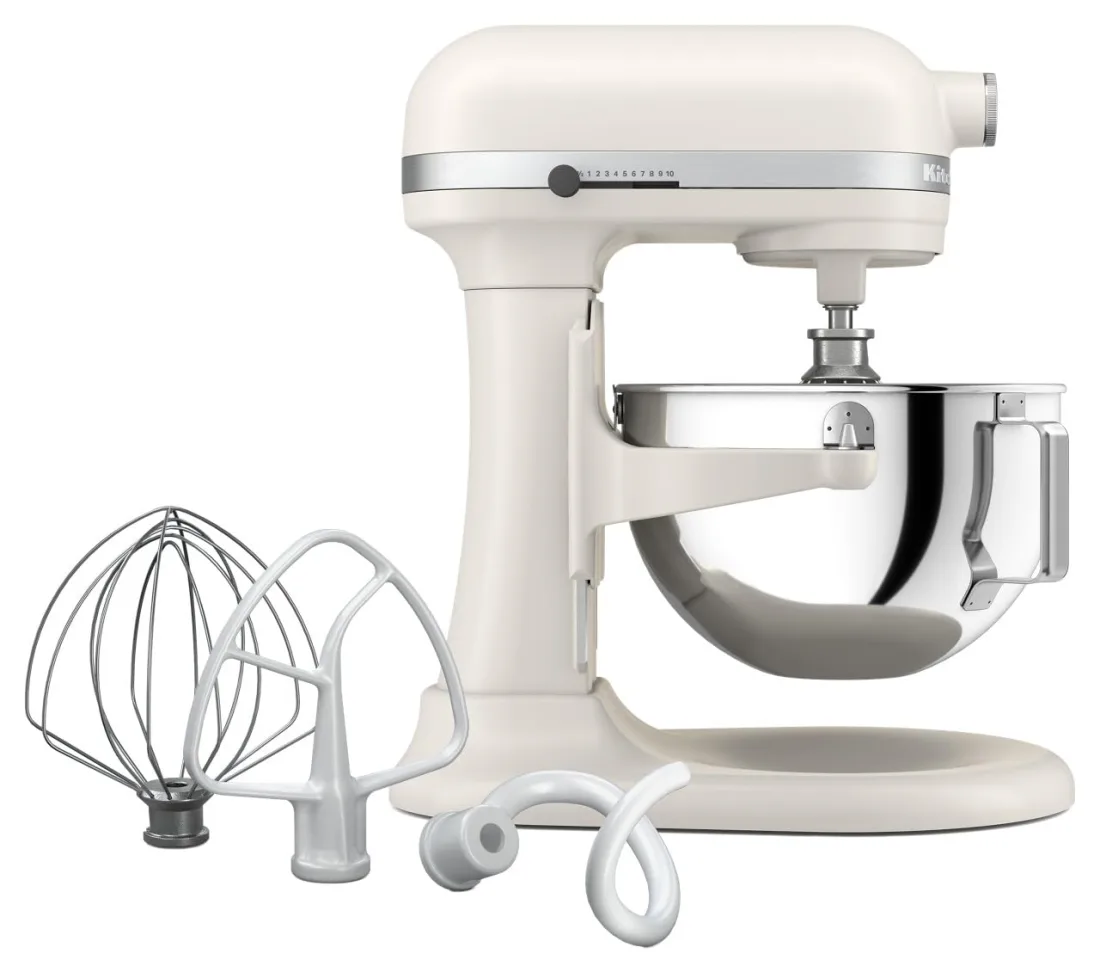
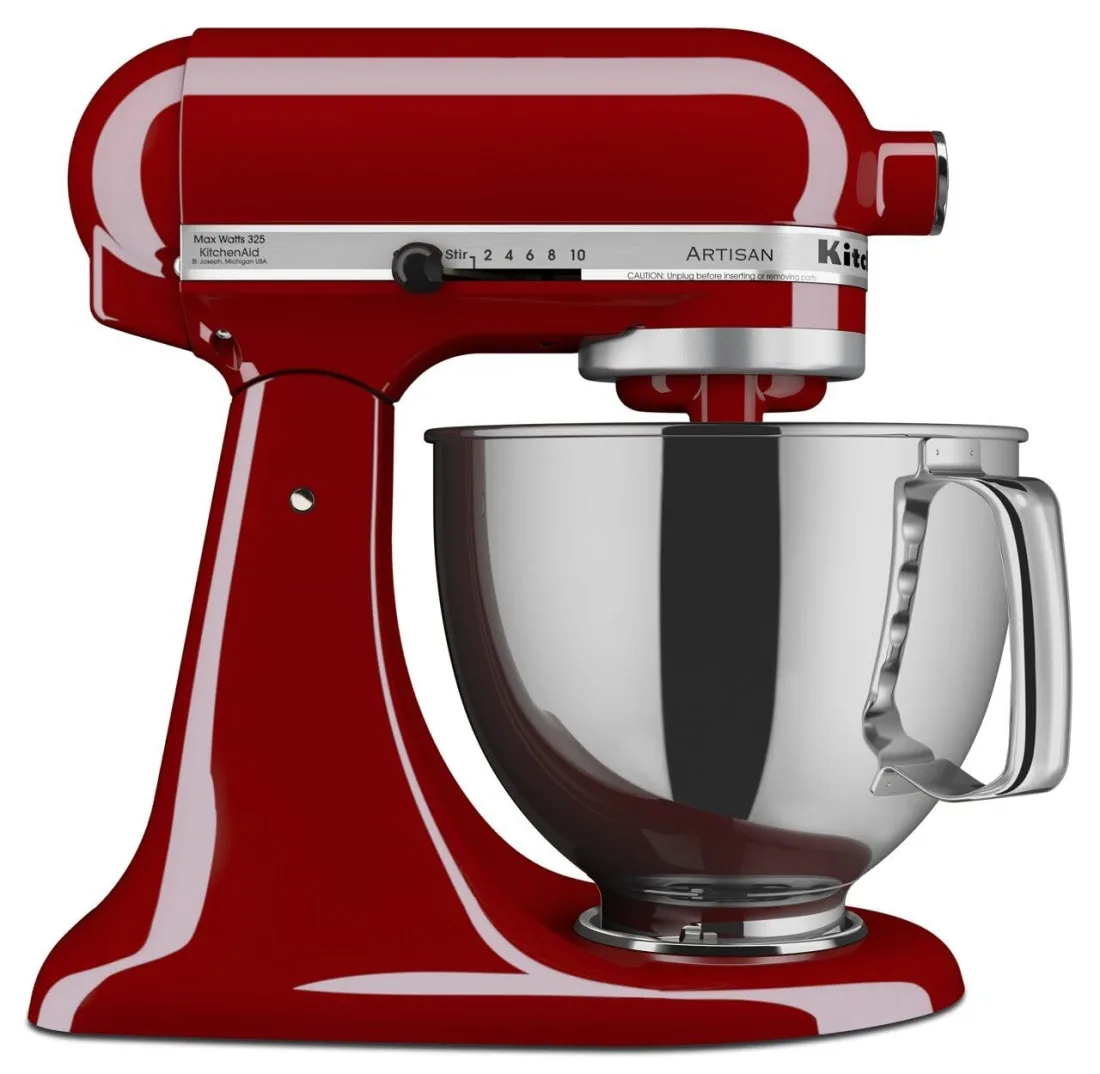
KitchenAid Artisan Series 5-Quart Tilt-Head Stand Mixer (KSM150PS)

4.7 · 23,138 ratings
See price on Amazon

The stand mixer other stand mixers are measured against. The Artisan pairs a 325-watt direct-drive motor with a die-cast metal body and the KitchenAid power hub, which unlocks pasta rollers, meat grinders, spiralizers and more. At 23 pounds it is the heaviest here, and the priciest, and for anyone who bakes weekly it is still the one to beat.

  • Die-cast metal body stays planted under heavy dough
  • Power hub fits 10+ attachments, far more than any rival here
  • Sold in 20+ colors with strong resale value
Best value

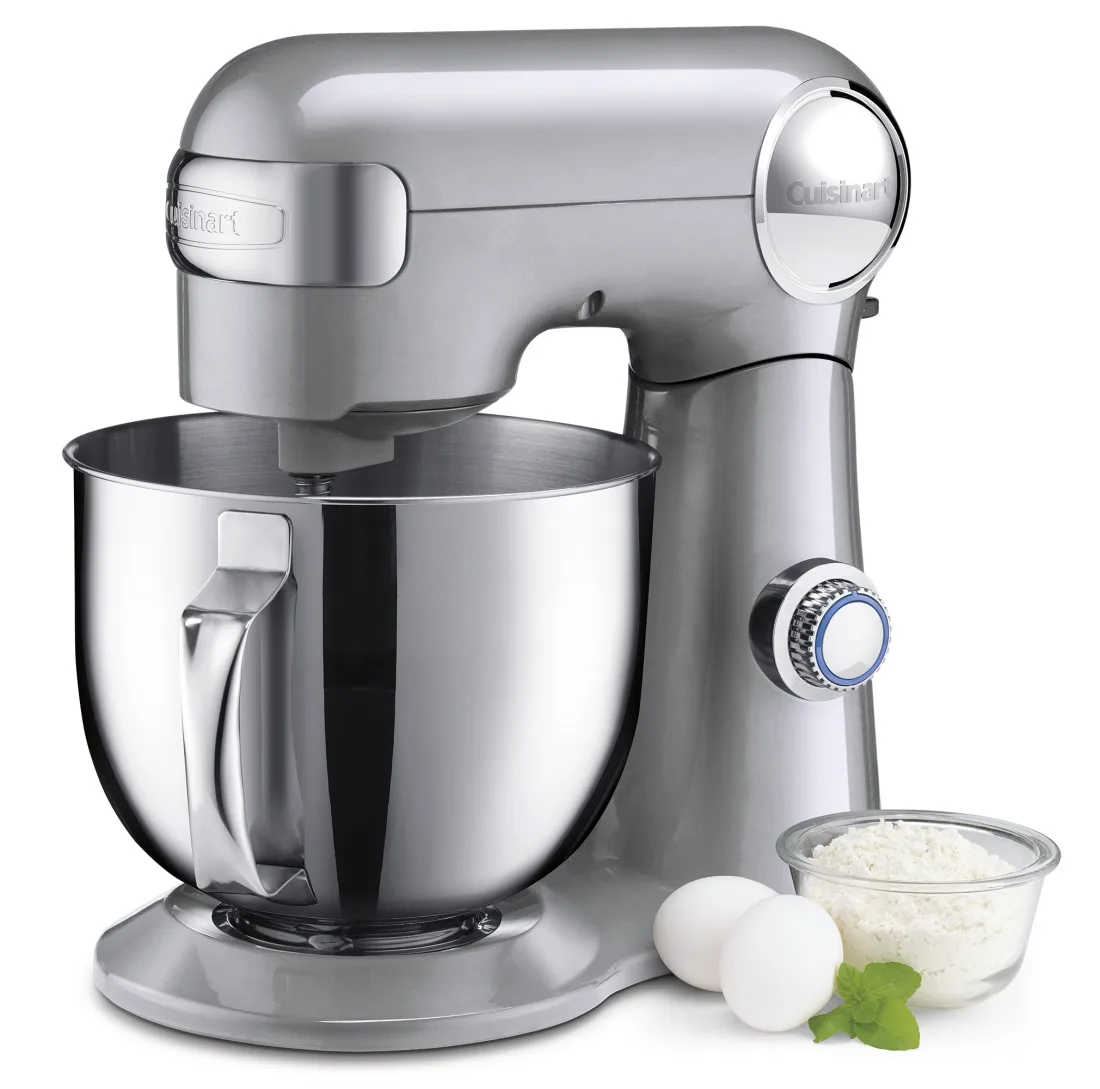
Cuisinart Precision Master 5.5-Quart Stand Mixer (SM-50)

4.7 · 9,992 ratings
See price on Amazon

The value pick among serious tilt-head mixers. The Precision Master gives you a die-cast metal body, a 500-watt motor, a 5.5-quart bowl, 12 speeds and a 3-year warranty for well under the price of a KitchenAid Artisan. It is also six pounds lighter. The catch is a much smaller attachment range.

  • Much cheaper than a KitchenAid Artisan for similar performance
  • Largest bowl among the tilt-head metal mixers here at 5.5 qt
  • 12 speeds and a 3-year warranty
Best for big batches

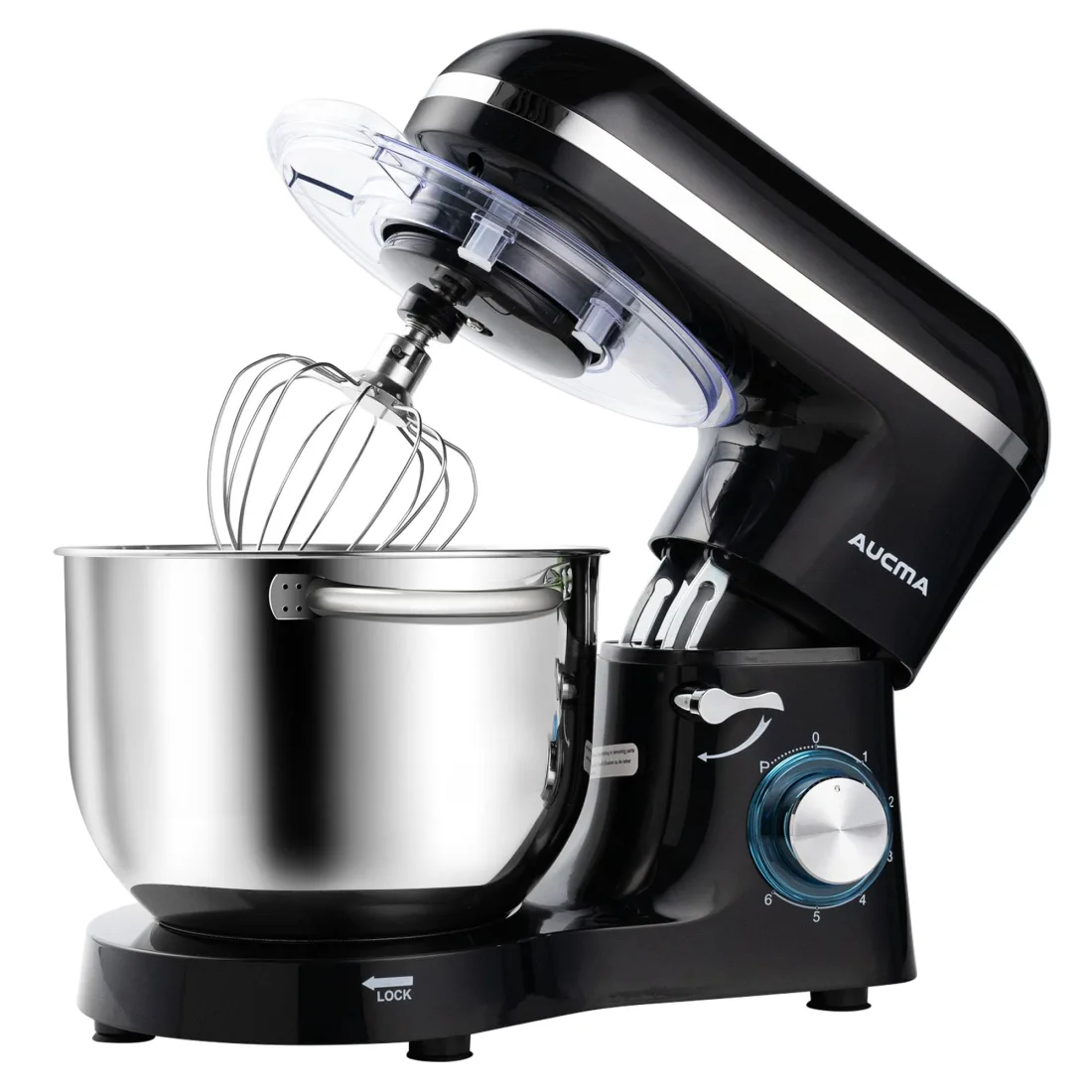
Aucma 6.5-Quart Tilt-Head Stand Mixer

4.6 · 15,237 ratings
See price on Amazon

The most bowl for the money. Aucma pairs a 6.5-quart stainless bowl, by far the largest here, with a 660-watt motor, a pulse function and the three standard attachments, at a budget price. The ABS-plastic body and the 6-speed range are the compromises.

  • 6.5-quart bowl, by far the largest in this comparison
  • Highest headline wattage here, plus a pulse function
  • Quiet in use; Aucma quotes 76 dB and owners agree
Best for small kitchens & budgets

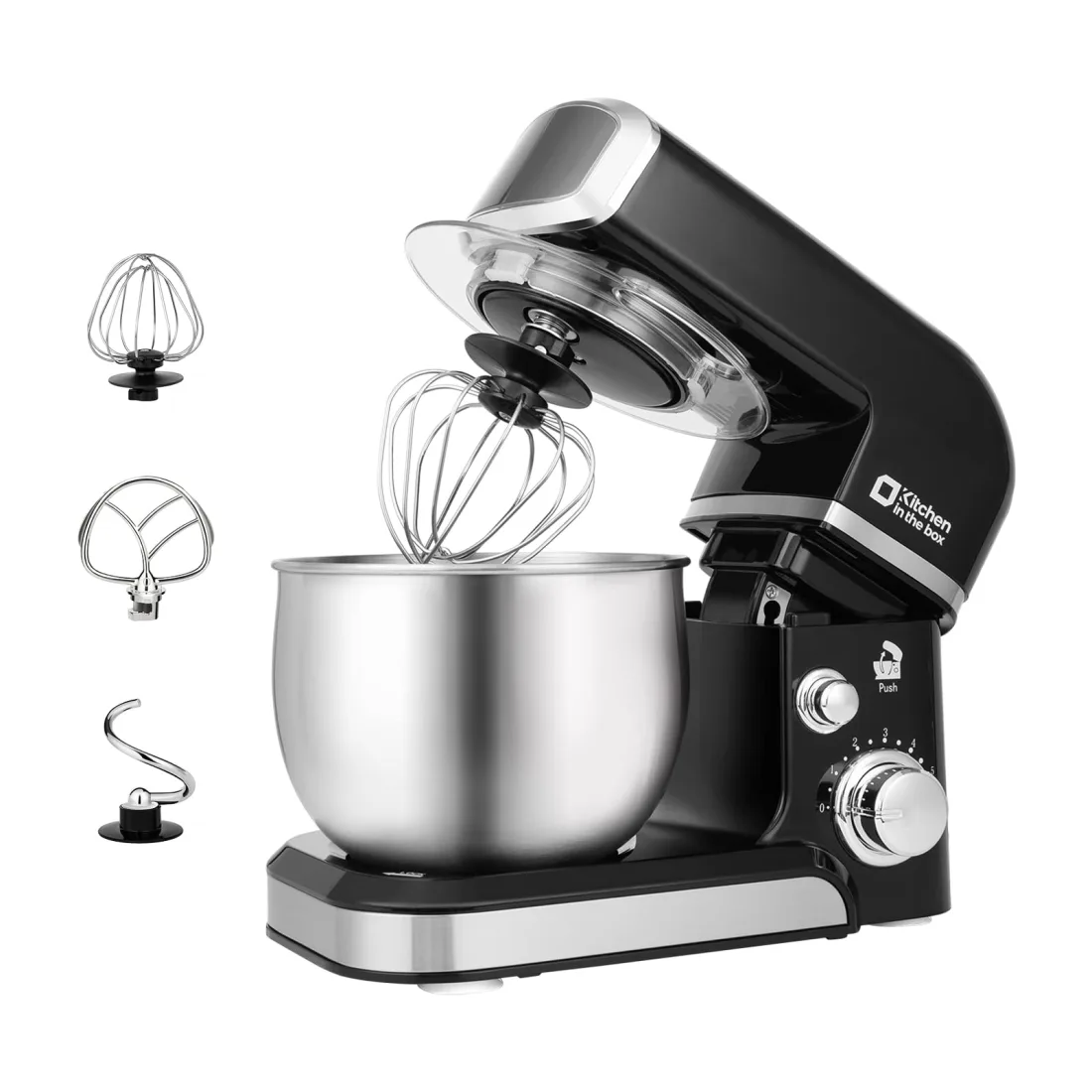
Kitchen in the Box 3.2-Quart Compact Stand Mixer

4.4 · 9,632 ratings
See price on Amazon

The smallest and lightest mixer on the site. A 3.2-quart bowl and a 7-pound plastic body make it a fit for one person, a couple, or a kitchen with almost no counter space. It handles one cake, a batch of cookies or a small loaf, and no more. Six speeds, planetary action, three attachments and a splash guard included.

  • Tiny footprint and 7 lb - easiest here to store and lift
  • Wide choice of colors
  • Flat beater, dough hook, whisk and splash guard included
At a glance

Every stand mixer we track, compared

Stand mixerTypeBowlPowerSpeedsAtt. hubWarrantyAmazonEditor score
KitchenAid Artisan Series 5-Quart Tilt-Head Stand Mixer (KSM150PS)Tilt-Head5 qt325 W10Yes1 yr4.7 ★7.5
Cuisinart Precision Master 5.5-Quart Stand Mixer (SM-50)Tilt-Head5.5 qt500 W12Yes3 yr4.7 ★7.5
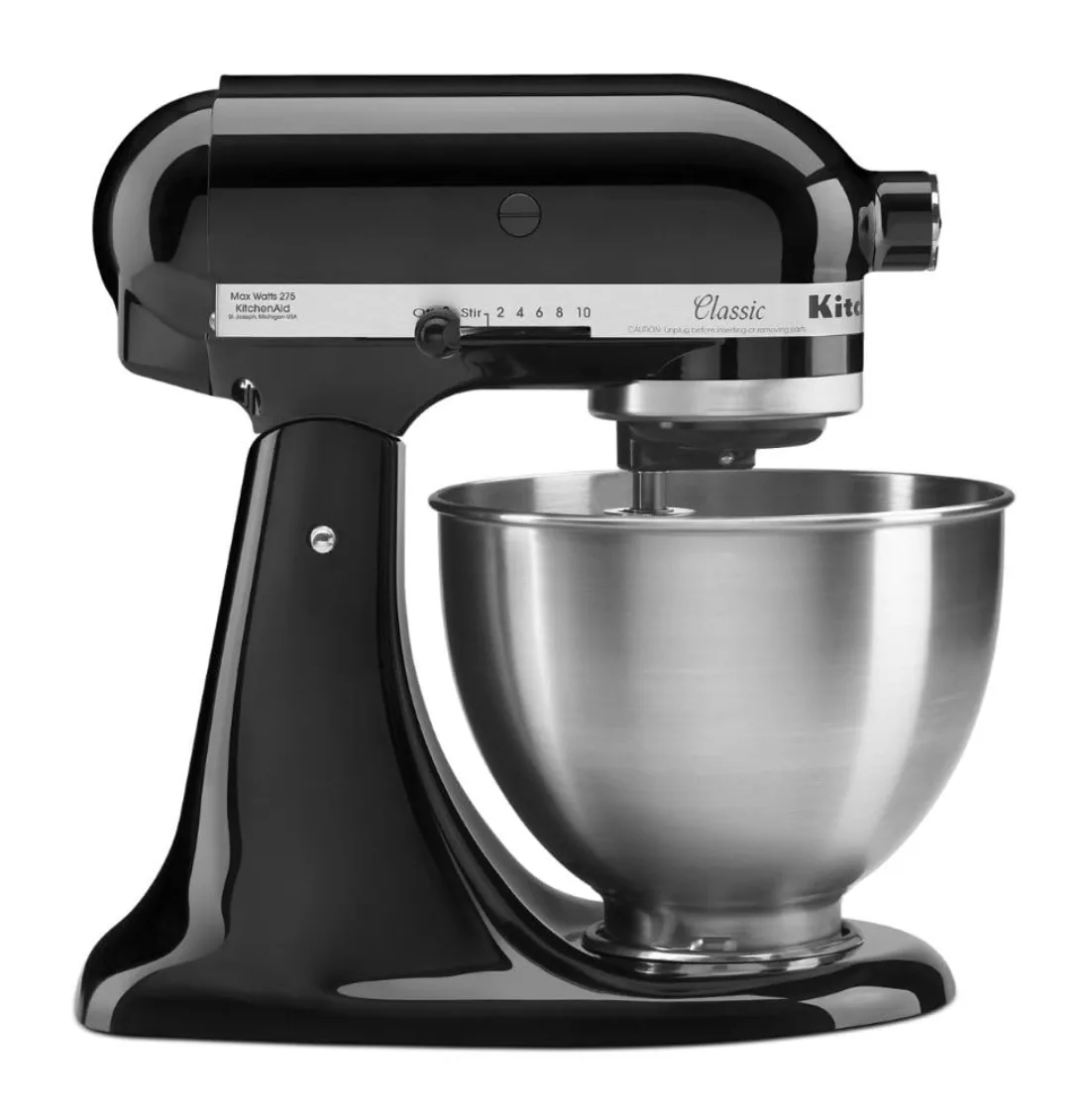
KitchenAid Classic Series 4.5-Quart Tilt-Head Stand Mixer (K45SS)Tilt-Head4.5 qt275 W10Yes1 yr4.8 ★7
Aucma 6.5-Quart Tilt-Head Stand MixerTilt-Head6.5 qt660 W6No4.6 ★6.5
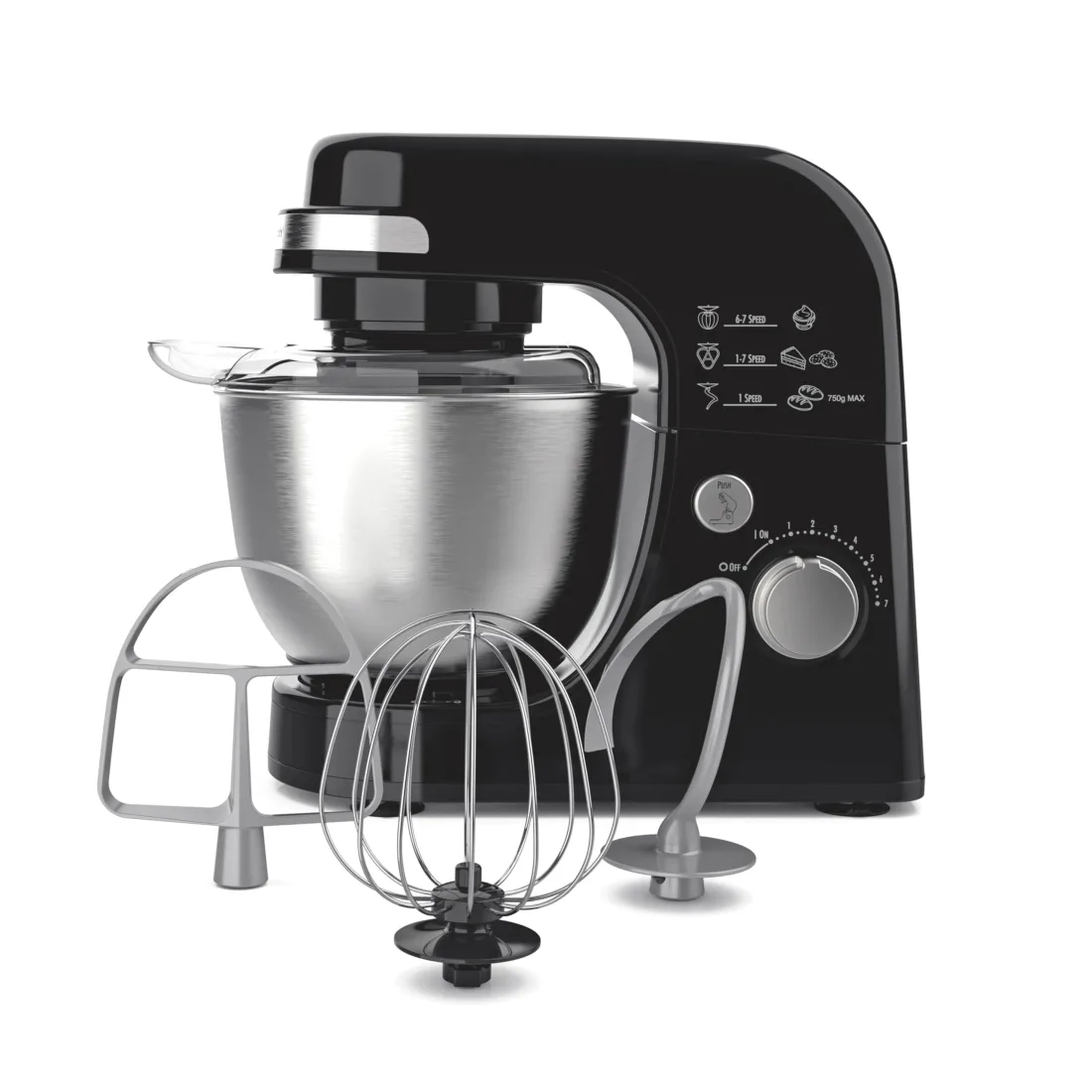
Hamilton Beach Electric Stand Mixer 4-Quart (63390)Tilt-Head4 qt300 W7No1 yr4.4 ★4.8
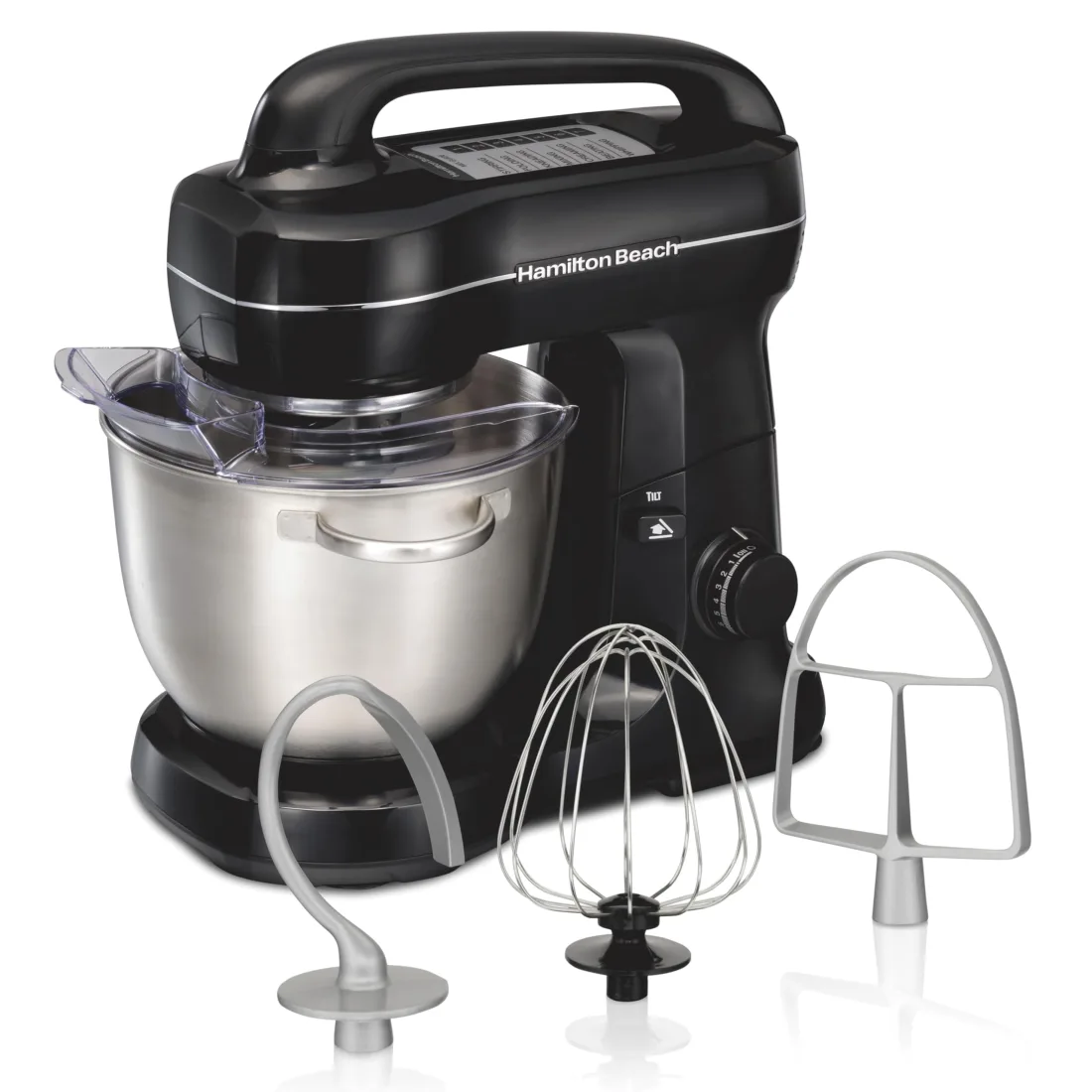
Hamilton Beach 4-Quart 7-Speed Stand Mixer with Easy-Carry Handle (63391)Tilt-Head4 qt300 W7No1 yr4.5 ★4.8
Kitchen in the Box 3.2-Quart Compact Stand MixerTilt-Head3.2 qt300 W6No4.4 ★4.2

Editor score is the mean of our six 0-10 ratings. Prices are not shown because they are not currently captured in USD - check each Amazon listing for the live price.

Open the interactive comparison tool

How to choose a stand mixer

1. Pick the design: tilt-head vs bowl-lift

Tilt-headBowl-lift
Best forCakes, cookies, frosting, occasional breadWeekly bread, big or back-to-back batches
Weight & heightLighter, fits under a cabinetHeavier, ~16-17 in tall with the head up
PriceLowerHigher
Stability under doughGood on a metal model, shaky on light plastic onesVery stable, runs cooler

2. Match the bowl to your household

  • 3.2–4 qt — one or two people, single recipes, tight counters.
  • 4.5–5.5 qt — the sweet spot for most families; a double batch of cookies or two loaves.
  • 6 qt and up — batch bakers, big families, party quantities.

Remember: usable dough capacity is about 60–70% of the number on the box.

3. Ignore the wattage race

Higher watts do not mean more kneading power. A 325-watt KitchenAid direct-drive motor out-performs many 600-watt budget motors because the drivetrain and body matter more than the headline number. For bread, prioritise a die-cast metal body, true planetary action and consistent owner reports on stiff dough.

4. Decide if you want the attachment ecosystem

If you might add a pasta roller, meat grinder, spiralizer or ice-cream bowl later, buy into the KitchenAid power-hub system now. If you will only ever mix, whip and knead, a Cuisinart or a good budget model saves you money with no real downside.

How we picked

Every mixer here has a full spec sheet and six editor scores on its review page. The picks above come from the mean of those scores. Use the comparison tool to weigh any two or more against each other on the numbers that matter to you.

Frequently asked questions

What is the best stand mixer overall?

For most home kitchens, a metal-bodied tilt-head mixer with a 5 to 5.5-quart bowl. The KitchenAid Artisan is the reference model for build quality and attachments; the Cuisinart Precision Master SM-50 is the value alternative with a bigger bowl and a longer warranty.

How many watts does a stand mixer need?

Watts are a rough guide at best, because brands measure them differently. A direct-drive motor around 300 to 350 watts, like KitchenAid's, will out-knead many 500 to 600-watt belt-driven budget motors. For regular bread, look at the body material, planetary action and owner reports on dough, not the wattage on the box.

Tilt-head or bowl-lift stand mixer?

Tilt-head is lighter, cheaper and easier to load and store, and it is enough for cakes, cookies, frosting and occasional bread. Bowl-lift is steadier and runs cooler under heavy, repeated dough work, but it is heavier, taller and more expensive. Most home kitchens are well served by a good tilt-head.

What bowl size should I buy?

Usable dough capacity is only about 60 to 70 percent of the rim capacity. A 3.2 to 4.5-quart bowl suits singles, couples and light baking; 5 to 5.5 quarts is the sweet spot for most families; 6 quarts and up makes sense if you routinely bake two or more loaves or large party batches.

What is planetary mixing action?

The beater spins on its own axis while also travelling around the bowl, the way a planet orbits. It reaches the whole bowl without you stopping to scrape. Almost every stand mixer worth buying, including budget models, now uses planetary action.

Are the attachments worth it?

Only if you will use them. KitchenAid's front power hub fits pasta rollers, grinders, spiralizers, an ice-cream bowl and more, and that ecosystem is a genuine reason to pay more. Cuisinart takes a handful of its own accessories; most budget brands take none, which is fine if you only mix, whip and knead.

How long does a stand mixer last?

A metal-bodied KitchenAid or Cuisinart commonly runs 15 to 30-plus years with occasional grease and gear service. Plastic-bodied budget mixers are typically built for lighter, less frequent use and shorter lifespans, which is reflected in their price.

Are stand mixers worth it?

If you bake more than a few times a month, yes. A stand mixer is hands-free, kneads bread dough that would tire your wrists, and whips cream and egg whites faster than a hand mixer. If you bake two or three times a year, a hand mixer is enough.
The full shortlist

Every mixer we considered

As an Amazon Associate we earn from qualifying purchases. Prices and availability are accurate as of the date shown and are subject to change. “Amazon” and the Amazon logo are trademarks of Amazon.com, Inc. or its affiliates.